When should an OEM choose thermoforming over injection molding?
Choose thermoforming when the part is large, the annual volume is in the hundreds-to-thousands, and tooling budget matters. Choose injection molding when the part is small, the volume is very high, and the design needs tight tolerances or intricate internal features. Part size and volume decide it more often than any other factor.
The five variables that decide it
Engineers rarely choose a process on cost alone. Five variables interact: part size, annual volume, tooling budget, dimensional tolerance, and feature complexity. Get those on the table and the answer usually resolves itself.
Injection molding excels at small, high-volume, high-precision parts with complex internal geometry. Heavy-gauge thermoforming excels at large parts at moderate volume where tooling cost and lead time matter. The middle ground is real, but the extremes are clear.
Part size: the first filter
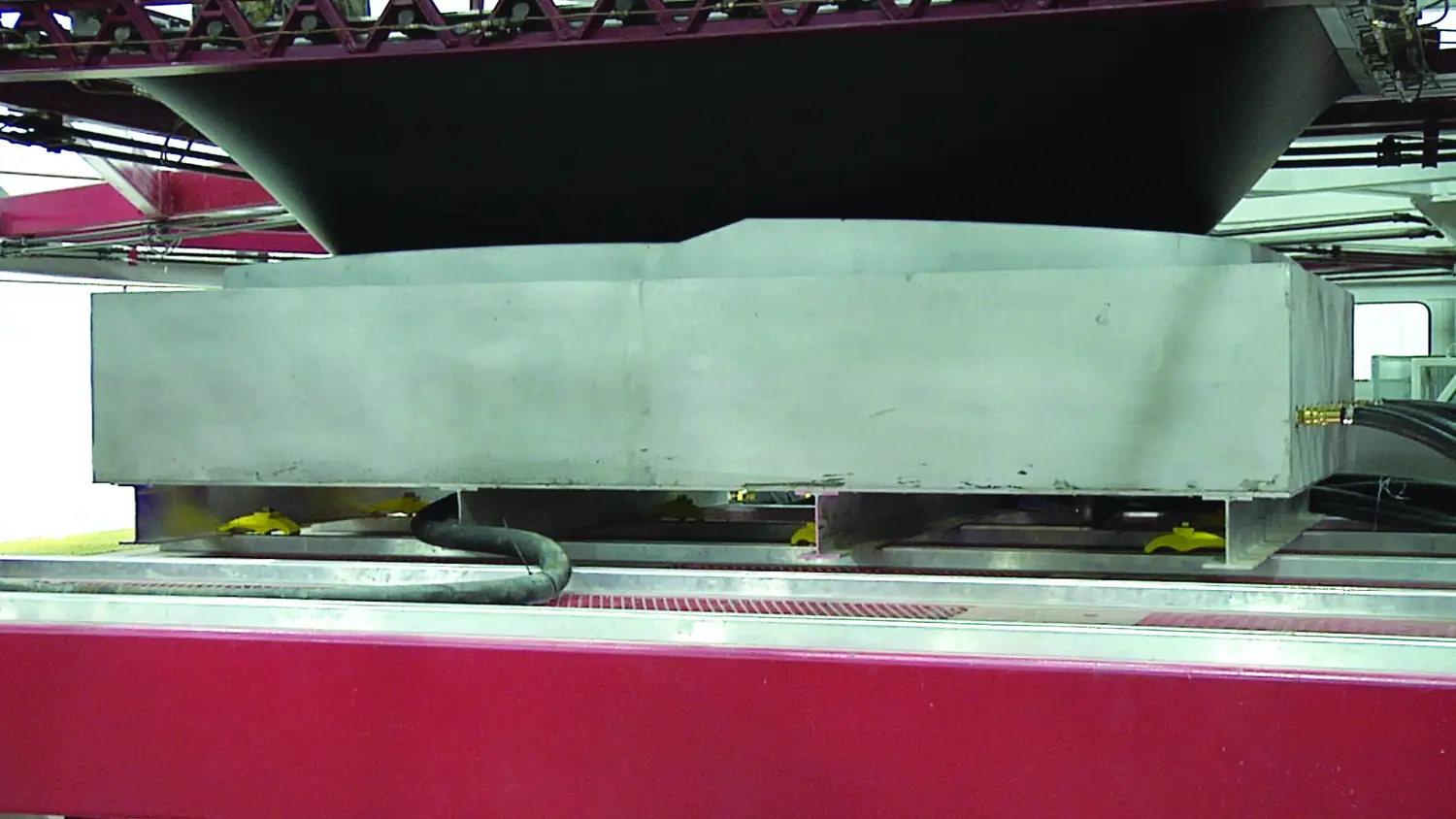
Injection molding is bounded by clamp tonnage and tool size. Past a certain envelope, the press simply does not exist, or the tool cost becomes prohibitive. Heavy-gauge thermoforming runs in the opposite direction — its sweet spot is large. ThermoFloe forms parts up to 25 feet long, 10 feet wide, and 6 feet deep.
If the part is larger than roughly a cubic yard, injection molding is usually off the table on tooling cost alone, and thermoforming becomes the default.
Volume and tooling cost
Injection tools are steel, multi-cavity, and expensive — often six figures — because they are built to amortize across hundreds of thousands of shots. Thermoforming tools are single-sided and a fraction of that cost, which is why thermoforming wins at the hundreds-to-low-thousands annual volumes typical of OEM equipment, trucking, and medical programs.
The break-even is a volume question: below it, thermoforming's lower tooling cost dominates; far above it, injection's lower per-part cost wins back the tooling premium.
Tolerance and detail
Injection molding holds tighter tolerances and reproduces intricate features — bosses, ribs, snap fits, thin internal walls — that thermoforming cannot. When a part needs that, injection is the right tool.
But many OEM parts are panels, enclosures, covers, and fairings where moderate tolerance and a clean cosmetic surface are enough. Pressure forming closes much of the detail and finish gap when appearance matters.
A simple decision rule
Large part, moderate volume, cost-sensitive tooling: thermoform it. Small part, very high volume, tight tolerance, complex features: injection mold it. When the part is large but needs an injection-molded look, pressure forming is the bridge.
The cleanest way to settle a borderline case is a manufacturability review against your actual drawing — which is what ThermoFloe's engineering team does before quoting.