
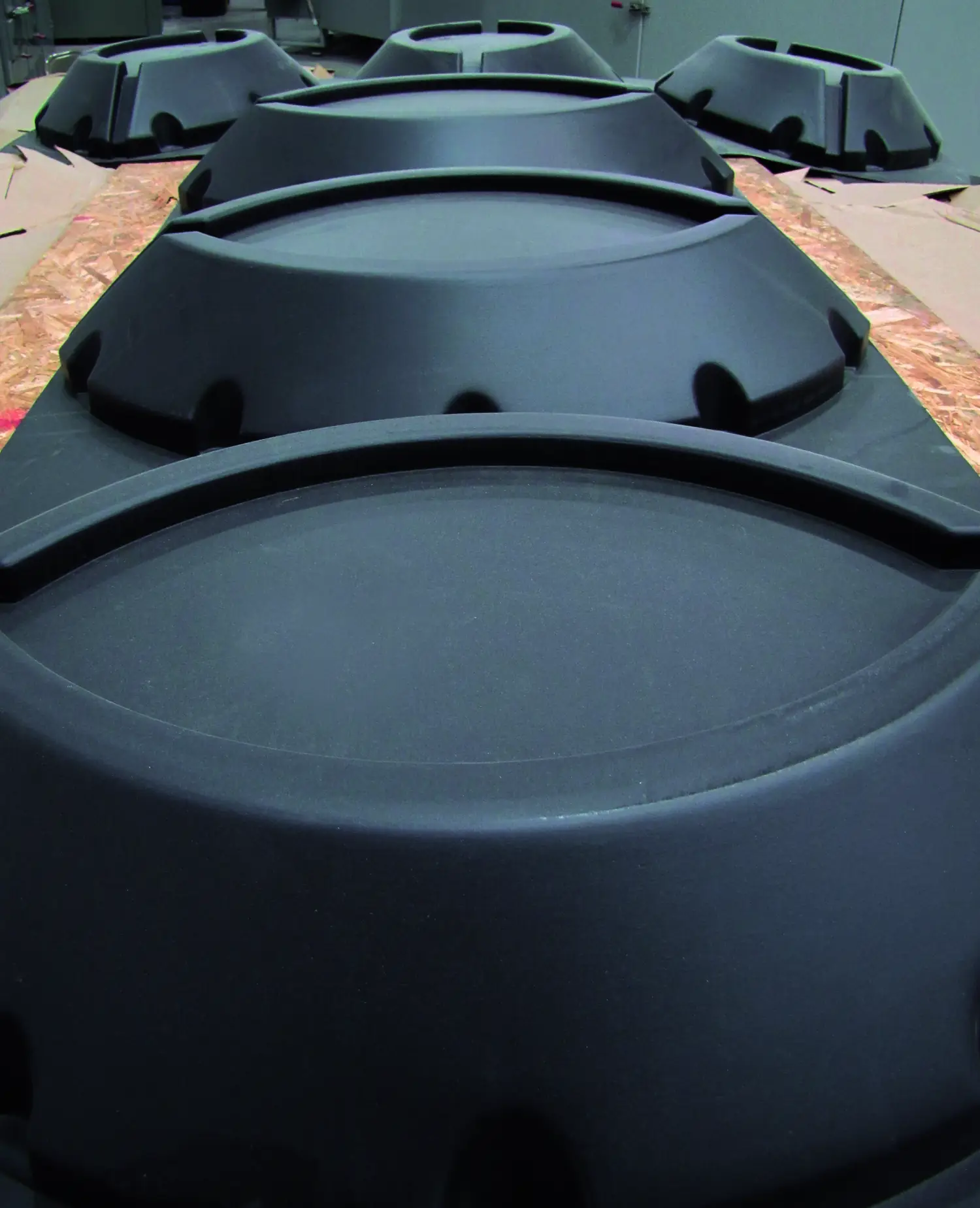
What materials are used in heavy-gauge thermoforming?
The common heavy-gauge materials are ABS for impact and cosmetics, HDPE and HMWPE for chemical resistance and toughness, TPO for outdoor durability, Kydex for rigidity and flame resistance, and acrylic or PETG where clarity matters. Material is matched to the part's structural, cosmetic, and environmental requirements.
ABS — the cosmetic workhorse
ABS balances impact resistance, rigidity, and a clean cosmetic surface, which makes it the default for visible OEM housings and panels. It pressure-forms well, takes texture and paint, and is offered in cap-stock and weather-resistant grades. For most enclosures and interior parts, ABS or an ABS/PC blend is the starting point.
HDPE and HMWPE — chemical and impact toughness
High-density and high-molecular-weight polyethylene shrug off chemicals, moisture, and abrasion, and they take impact without cracking. They are the choice for tanks, liners, fenders, and structural parts that live outdoors or near chemicals. The trade-off is a more utilitarian surface that does not take paint readily.
TPO — outdoor durability
Thermoplastic olefins resist UV, heat, and weather, which is why they show up on exterior automotive and equipment parts. TPO holds up to sun and temperature cycling over years of outdoor service while staying tough and flexible.
Kydex — rigidity and flame resistance
Kydex is a rigid, durable acrylic-PVC alloy with inherent flame, smoke, and chemical resistance. It is common in transit interiors, medical equipment, and aircraft where flammability ratings and a tough, cleanable surface matter.
Acrylic and PETG — clarity and finish
When the part needs optical clarity or a high-gloss finish — lenses, covers, displays — acrylic and PETG deliver. They are less impact-tough than ABS unless modified, so they fit cosmetic and light-transmitting roles rather than structural ones.
How the choice actually gets made
Material selection is not a lookup table; it is a balance of impact, chemical and UV exposure, flammability, finish, regulatory needs, and cost. The reliable way to get it right is to review the part's service environment against candidate materials during engineering — before tooling is cut.