
Heavy-Gauge
Vacuum Forming
Pressure-assisted vacuum forming for OEM parts too big, too thick, or too deep for anyone else's floor. Up to 25 ft long, 10 ft wide, 6 ft deep.
What is heavy-gauge vacuum forming?
Heavy-gauge vacuum forming is a thermoforming process that uses vacuum pressure to draw a heated plastic sheet — typically .060 inches or thicker — over a mold. ThermoFloe forms sheet up to .600 inches starting gauge in part sizes up to 25 feet long, 10 feet wide, and 6 feet deep.
Heavy-Gauge Vacuum Forming, explained
Vacuum forming heats a thermoplastic sheet to its forming temperature, then evacuates the air between the sheet and a single-sided mold so atmospheric pressure draws the material tight to the tool. Because tooling is single-sided, vacuum forming carries lower tooling cost than injection or pressure forming and scales cleanly to very large parts.
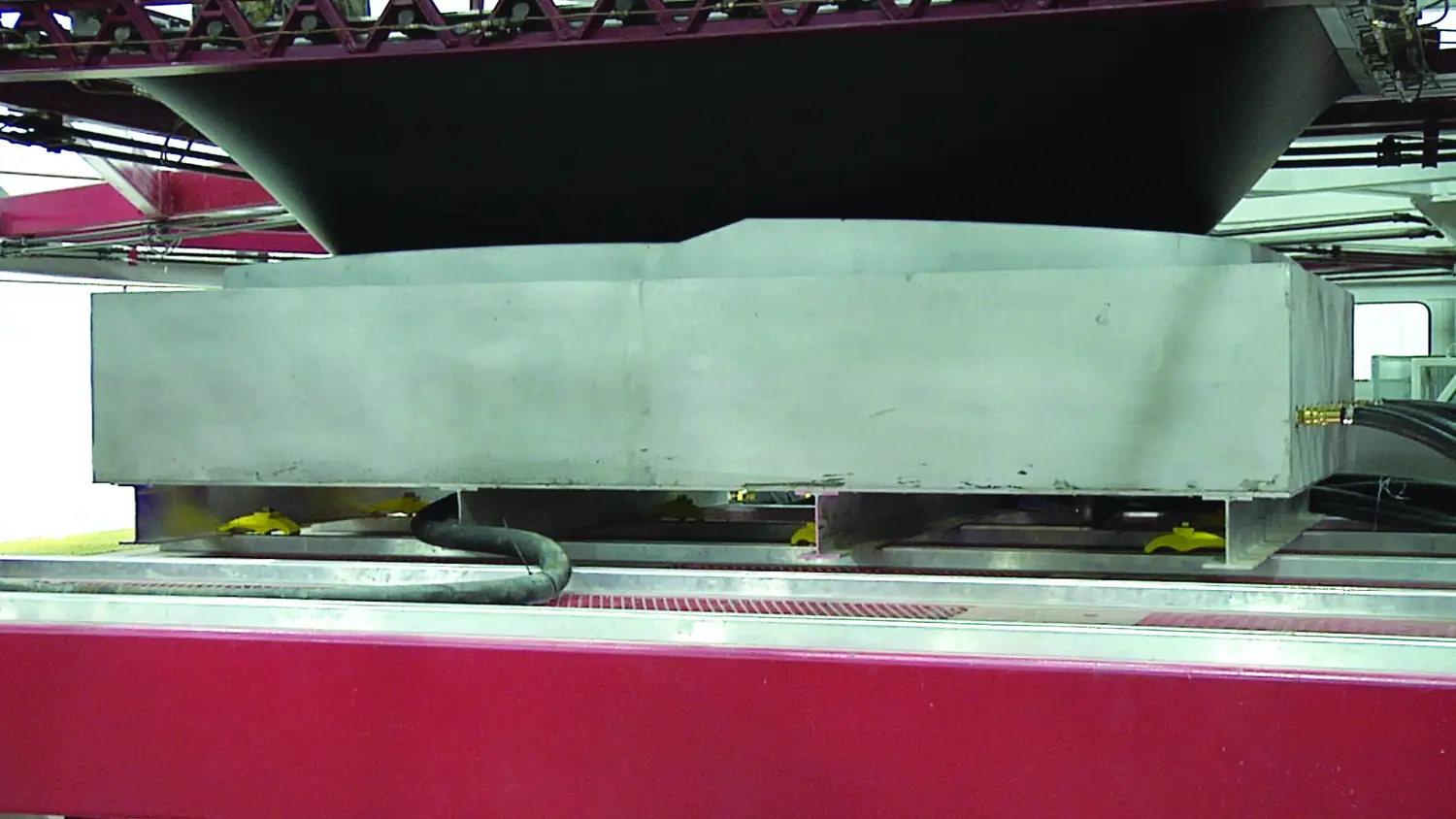
Heavy-gauge means starting stock of roughly .060" and up — the structural end of the range, where parts replace sheet metal, fiberglass, and welded assemblies. ThermoFloe runs heavy-gauge stock up to .600" starting gauge on the AVT 3-station rotary, the largest machine of its kind in the world.
Choosing the right process
Vacuum forming is the right process when the part is large, the cosmetic tolerance is moderate, and per-unit tooling cost matters. Here is how it lines up against the alternatives engineers usually weigh.
Explore the rest of the floor
Heavy-Gauge Pressure Forming
When the part needs sharp detail, defined texture, and tight tolerances without injection-…
Secondary Operations
Forming is half the job. ThermoFloe trims, finishes, assembles, and packages in-house, so …
In-House Tooling
Tooling is the long pole in most thermoforming programs. ThermoFloe mills prototype tools …
Questions OEM engineers ask
What is the largest part you can vacuum form?
Up to 25 feet long, 10 feet wide, and 6 feet deep using the AVT 3-station rotary thermoformer — the largest of its kind in the world.
What materials can be heavy-gauge vacuum formed?
ABS, HDPE, HMWPE, TPO, Kydex, acrylic, PETG, polycarbonate, and most engineering thermoplastics. If it can be thermoformed, ThermoFloe can build it.
Vacuum forming vs pressure forming — when do I use each?
Vacuum forming is the right choice for larger parts with looser cosmetic tolerances and lower per-unit cost. Pressure forming is preferred when sharp detail, textured surfaces, or tighter tolerances are required.
What is the typical gauge range for heavy-gauge vacuum forming?
Heavy-gauge generally starts around .060 inches. ThermoFloe forms starting stock up to .600 inches, the heavy end of the structural range where parts replace sheet metal and fiberglass.
How large does a tool have to be, and who builds it?
Tooling is single-sided, which keeps cost down at large sizes. ThermoFloe mills prototype tooling in-house for a fast first turn and scales to partner-built production tooling once the part is proven.
Is vacuum forming production-ready or just for prototypes?
Both. The same floor that forms the first article runs the production program — trimmed on 5-axis and 4-axis CNC, finished, assembled, and shipped as a production-ready component.
Send us the part. We'll tell you how to build it.
Upload your drawing or describe the program. NDA-friendly. We review every RFQ ourselves — response within 1 business day.