Heavy-Gauge
Pressure Forming
When the part needs sharp detail, defined texture, and tight tolerances without injection-molded tooling cost — pressure forming forces the sheet into the tool for an injection-molded look.
What is heavy-gauge pressure forming?
Heavy-gauge pressure forming is a thermoforming process that adds compressed air on the back of the heated sheet — on top of vacuum — to force the material hard into the tool. The added pressure captures sharp detail, crisp text, and Class-A texture that vacuum forming alone cannot, at a fraction of injection-molding tooling cost.
Heavy-Gauge Pressure Forming, explained
Pressure forming runs the same single-sided tooling economics as vacuum forming, then adds positive air pressure — typically several atmospheres — against the back of the sheet. That pressure differential drives the material into fine features: tight radii, crisp parting lines, molded-in logos, vents, and grained cosmetic texture.
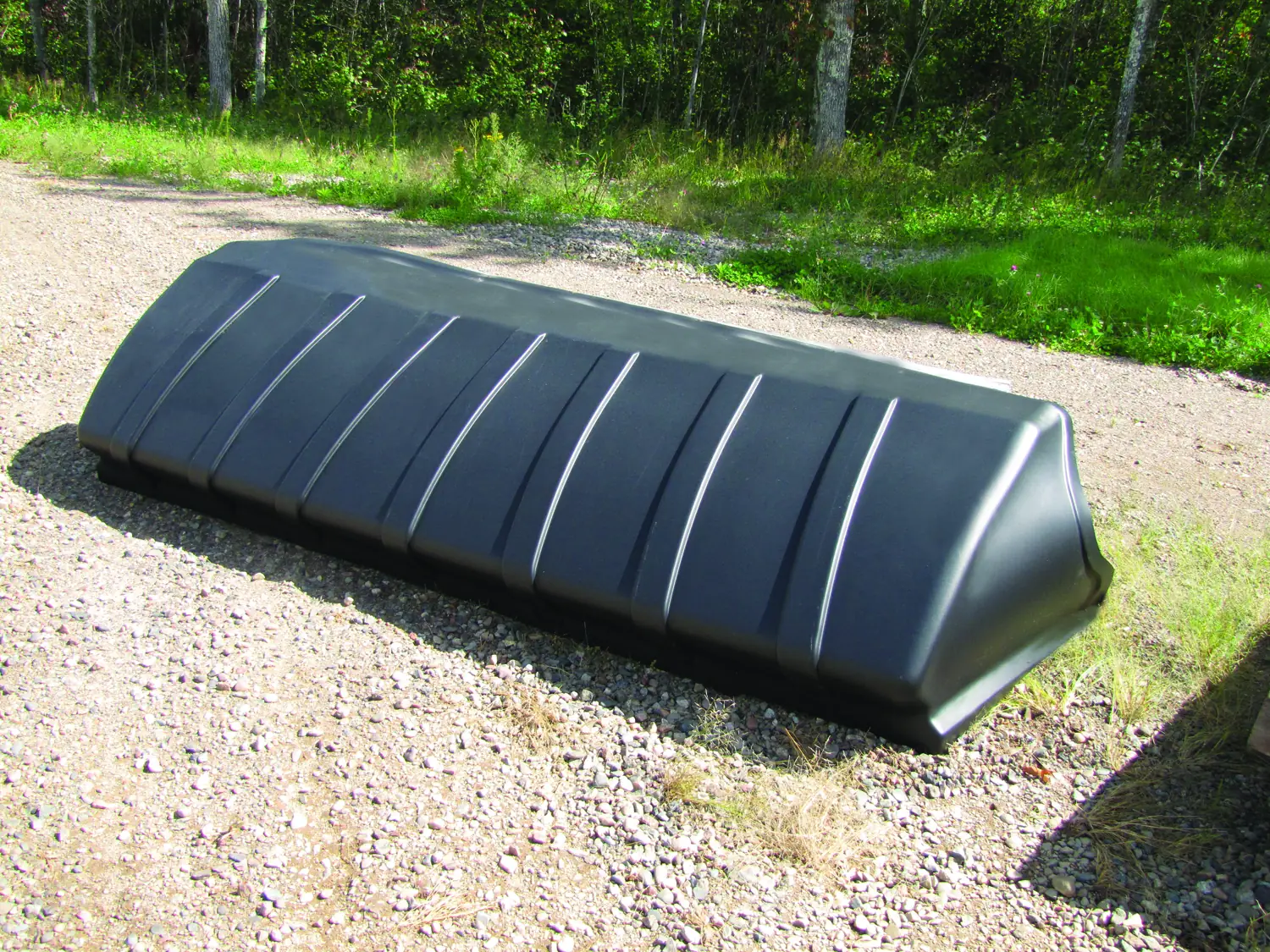
For OEM cosmetic housings and enclosures, pressure forming delivers an injection-molded appearance at thermoforming tooling cost, and it scales to large parts that would be impractical or impossibly expensive to injection mold.
Choosing the right process
Pressure forming sits between vacuum forming and injection molding. Use it when appearance and detail matter but the part is too large — or the volume too modest — to justify injection tooling.
Explore the rest of the floor
Heavy-Gauge Vacuum Forming
Pressure-assisted vacuum forming for OEM parts too big, too thick, or too deep for anyone …
Secondary Operations
Forming is half the job. ThermoFloe trims, finishes, assembles, and packages in-house, so …
In-House Tooling
Tooling is the long pole in most thermoforming programs. ThermoFloe mills prototype tools …
Questions OEM engineers ask
How is pressure forming different from vacuum forming?
Vacuum forming relies on atmospheric pressure pulling the sheet onto the tool. Pressure forming adds compressed air against the back of the sheet, multiplying the forming force so the material captures sharp detail and texture vacuum forming cannot.
Can pressure forming match an injection-molded appearance?
For most cosmetic housings, yes. Pressure forming reproduces tight radii, crisp parting lines, molded-in text, and grained texture — an injection-molded look without injection-molded tooling cost, and at much larger part sizes.
What tolerances can you hold?
Pressure forming holds tighter, more repeatable tolerances than vacuum forming. Exact figures depend on part geometry, material, and shrink; ThermoFloe reviews tolerance on every drawing during DFM.
What materials pressure form well?
ABS, ABS/PC blends, Kydex, TPO, acrylic, and polycarbonate are common for cosmetic and structural pressure-formed parts. Material selection is part of the engineering review.
Is pressure forming cost-effective at low volume?
Yes. Single-sided tooling keeps entry cost far below injection molding, which makes pressure forming practical for the hundreds-to-low-thousands annual volumes typical of OEM enclosures and panels.
How large can a pressure-formed part be?
Large-format. ThermoFloe's forming envelope reaches 25 ft long, 10 ft wide, and 6 ft deep — well beyond the practical range of injection molding.
Send us the part. We'll tell you how to build it.
Upload your drawing or describe the program. NDA-friendly. We review every RFQ ourselves — response within 1 business day.