Why do truck OEMs use thermoforming?
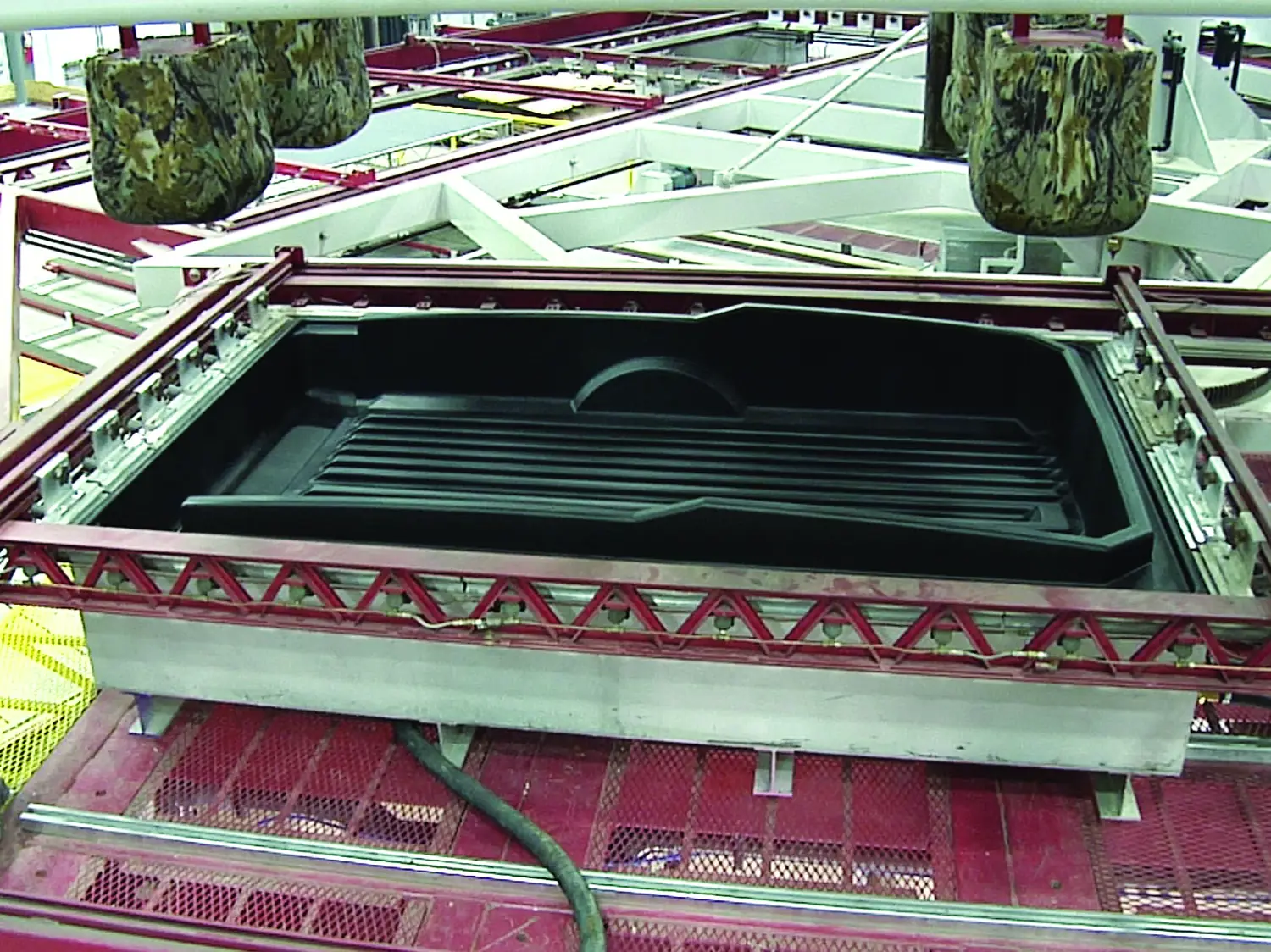
Class 8 and vocational truck OEMs use heavy-gauge thermoforming for aero fairings, fender extensions, sleeper components, and interior panels because formed plastic is lighter than metal, corrosion-free, and large-format — and because single-sided tooling fits the modest volumes truck programs run far better than injection molding.
Weight and corrosion
Every pound off a truck is payload or fuel economy gained. Heavy-gauge thermoformed parts weigh less than the steel or aluminum assemblies they replace, and they never corrode — no paint, no rust, no galvanic issues at fasteners. Over a million-mile service life that durability compounds.
Large aerodynamic shapes as single parts
Aero fairings and sleeper panels are large, curved, and cosmetic. Forming them lets a single part replace a multi-piece stamped or molded assembly, cutting seams, fasteners, and assembly labor while improving the aerodynamic surface that drives fuel economy.
Tooling cost fits truck volumes
Truck programs run thousands of units a year, not millions. At that volume, injection tooling rarely amortizes. Single-sided thermoforming tooling costs a fraction of it, which makes thermoforming the economical choice for the part counts trucking actually builds.
Cosmetics where they matter
Visible interior and exterior parts can be pressure formed for Class-A surfaces and grained texture that match OEM cosmetic standards, while structural and hidden parts are vacuum formed to save cost. The same floor does both.
What OEMs should bring to the table
A drawing or CAD, target volumes, the service environment, and any cosmetic or regulatory requirements are enough to start. ThermoFloe returns design-for-manufacture feedback within five business days and carries the program from first article to production.